
Continuous chemical equipment
provider
provider
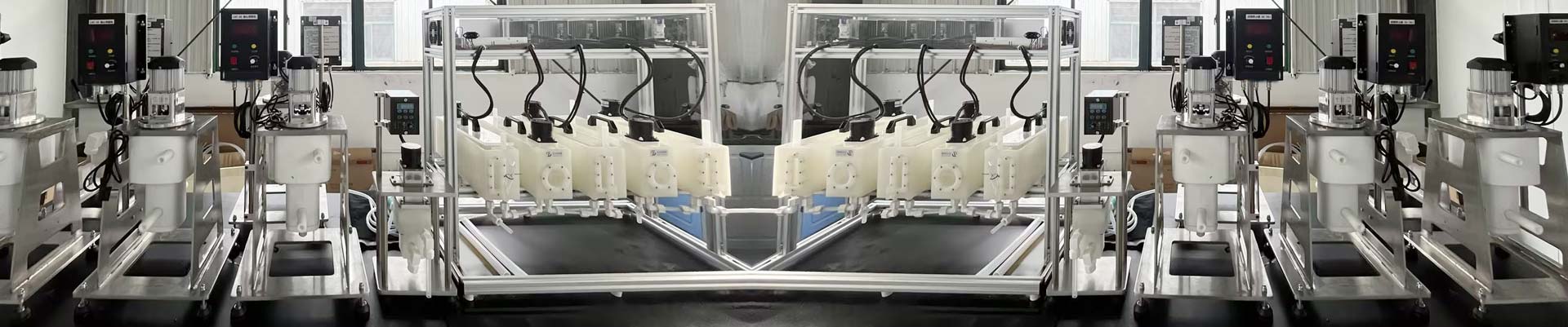
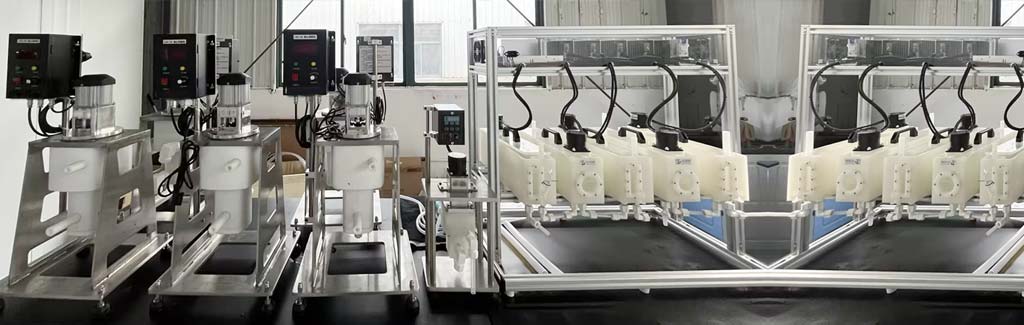
The global surge in demand for lithium—driven by the rapid expansion of electric vehicles, energy storage systems, and renewable energy infrastructure—has exposed critical bottlenecks in traditional lithium extraction technologies. Low lithium recovery rates (often below 85% in conventional processes), high energy consumption, severe impurity interference, and escalating environmental compliance costs have become major obstacles to sustainable lithium production, whether from primary sources like salt lake brines and hard rock ores or secondary sources such as spent lithium-ion batteries. As the industry races to meet the projected 5 million tons of global lithium demand by 2050, there is an urgent need for cost-effective, energy-efficient, and scalable separation technologies that can handle low-concentration, high-impurity feed solutions while minimizing environmental impact. The mixer-settler, a mature yet continuously optimized liquid-liquid extraction device, has emerged as a core solution to these pain points, leveraging its unique staged contact and gravity separation capabilities to enable high-efficiency lithium extraction, deep purification, and resource recycling. This article comprehensively explores the working principle, application scenarios, technical advantages, industrial practices, and future upgrades of mixer-settlers in lithium extraction, providing a practical reference for industry professionals and researchers seeking to optimize lithium production processes.
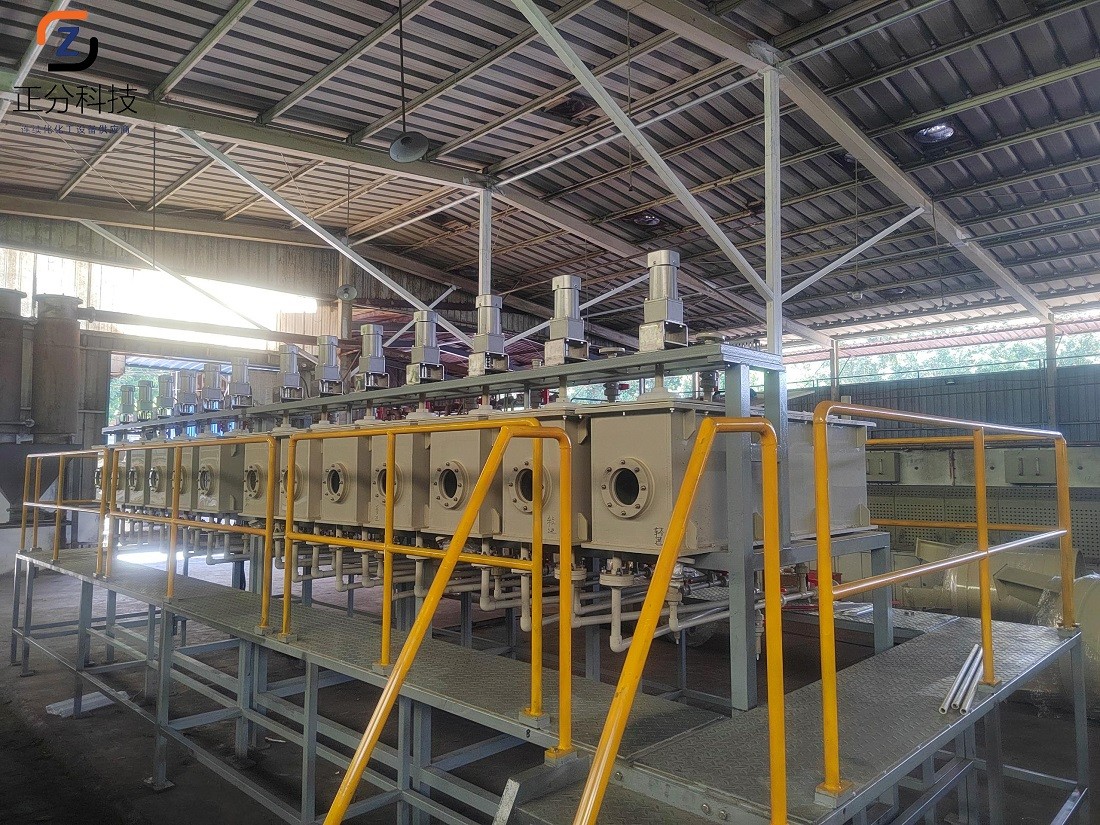
A mixer-settler, also known as an extraction tank, is a staged contact liquid-liquid mass transfer device that relies on gravity for phase separation, consisting of two key components: the mixing chamber and the settling chamber. Its operating logic is tailored to the unique challenges of lithium extraction, particularly the need to separate lithium ions from complex, low-concentration feed solutions with high levels of impurities like magnesium, sodium, and calcium.
In the mixing chamber, the aqueous feed solution (containing lithium ions) and organic extractant are fully dispersed and mixed through a specialized stirring system—typically a combination of axial-radial stirring paddles designed to create a three-dimensional cross-flow mixing effect. This controlled mixing reduces the liquid droplet size to 0.1–0.5 mm, maximizing the contact area between the two phases and accelerating the mass transfer process, where lithium ions selectively bind to the extractant and transfer from the aqueous phase to the organic phase. After sufficient mixing, the emulsion enters the settling chamber, where the organic and aqueous phases naturally separate due to their density difference. The optimized weir height and coalescing packing layer in the settling chamber stabilize the emulsion layer thickness at 5–8 cm, reducing the dosage of demulsifiers by 30% and preventing clogging from suspended solids, ensuring stable continuous operation.
For lithium extraction, mixer-settlers are typically operated in a multi-stage series configuration, integrated with washing, stripping, and extractant regeneration sections to form a closed-loop separation system. This staged design addresses the slow kinetic complexation reaction between lithium ions and extractants, overcoming the limitation of single-stage extraction and enabling deep purification of lithium ions.
Mixer-settlers are highly versatile and have been widely applied in lithium extraction from both primary and secondary sources, adapting to different feed characteristics and process requirements through targeted optimization. Below are the key application scenarios:
Salt lake brines are the most abundant primary source of lithium, but they often feature high magnesium-lithium ratios (Mg/Li > 20) and low lithium concentrations (3–5 g/L), making lithium separation extremely challenging. Traditional evaporation-crystallization processes require massive water consumption and long production cycles (6–12 months) and suffer from low lithium recovery rates (often below 65%). Mixer-settlers solve these issues by adopting a synergistic extraction system—such as the TBP-FeCl₃ system with 5% Cyanex923 as an additive—to form (Li·FeCl₄·2TBP) complexes, achieving efficient separation of lithium ions from magnesium, sodium, and other impurities with a Li/Na separation coefficient exceeding 1000.
In industrial applications, 6–8 stages of mixer-settlers are connected in series to process salt lake brines, increasing lithium recovery rates to over 96% while reducing energy consumption by 50% compared to evaporation-crystallization processes. For example, a salt lake lithium recovery project in Qinghai, China, uses a 6-stage mixer-settler system with a treatment capacity of 100 m³/h, achieving annual reduction of waste salts by over 100,000 tons and significantly improving the comprehensive utilization efficiency of salt lake lithium resources.
With the global stock of spent lithium-ion batteries exceeding 1.4 million tons in 2025, recycling lithium from these secondary resources has become a critical strategy to alleviate resource shortages and environmental pressure. However, the leachate from spent batteries—whether from ternary lithium or lithium iron phosphate batteries—contains low lithium concentrations, complex impurities (nickel, cobalt, manganese, aluminum), and 3–5% suspended solids, which easily cause equipment clogging and emulsification in traditional extraction processes.
Mixer-settlers are integrated into the hydrometallurgical recycling process, following pretreatment steps such as battery discharge, dismantling, low-temperature pyrolysis (200–300°C to remove PVDF binders), and leaching. The leachate is first adjusted to a pH of 1.5–9.0 (depending on the extractant type) and treated with a buffer to remove suspended impurities, then fed into a multi-stage mixer-settler system. For ternary battery leachates, a composite extractant of β-diketones and ionic liquids (diluted with sulfonated kerosene) is used, achieving a lithium recovery rate of 98.5% through 4-stage countercurrent extraction with a single-stage residence time of 15–30 minutes. For lithium iron phosphate battery leachates, optimized mixer-settler designs ensure stable operation even with high suspended solids, maintaining a continuous operation stability rate of 99%.
After extraction, the loaded organic phase enters the washing section of the mixer-settler to remove residual impurity ions, then proceeds to the stripping section, where 0.5–1 mol/L dilute sulfuric acid or hydrochloric acid is used to elute lithium ions back into the aqueous phase, forming a high-purity lithium chloride or lithium sulfate solution. The stripped organic phase is regenerated by distillation and recycled to the extraction section, with a recycling rate of 98% and solvent loss reduced to below 0.2%.
Hard rock ores (such as spodumene) are another important primary source of lithium, but traditional sulfuric acid roasting-leaching processes have high energy consumption (electricity consumption > 25 kW·h/m³) and severe equipment corrosion. Mixer-settlers are integrated into the hydrometallurgical process for hard rock lithium extraction, replacing high-energy roasting steps with efficient liquid-liquid extraction.
After crushing, grinding, and acid leaching of spodumene, the leachate—containing lithium ions and impurities like aluminum, iron, and magnesium—is fed into a mixer-settler system. By selecting appropriate extractants and optimizing the number of extraction stages, lithium ions are selectively separated from impurities, with a recovery rate of over 97% and a reduction in energy consumption of 40% compared to traditional roasting processes. This application is particularly valuable for low-grade hard rock ores, where mixer-settlers enable economic lithium extraction that would otherwise be unfeasible with conventional technologies.
Compared to traditional lithium extraction technologies (evaporation-crystallization, adsorption) and alternative extraction equipment (centrifugal extractors), mixer-settlers offer targeted advantages that directly solve the core pain points of the lithium extraction industry, as summarized below:
The multi-stage countercurrent extraction design of mixer-settlers overcomes the limitation of low recovery rates in single-stage extraction, increasing lithium recovery from below 70% in traditional processes to over 97% in industrial applications. This is particularly critical for low-concentration lithium resources, such as salt lake brines and spent battery leachates, where even a small increase in recovery rate translates to significant economic benefits. For example, a spent lithium-ion battery recycling project in Shandong, China, increased its lithium recovery rate from 82% to 98.2% after adopting an 8-stage mixer-settler system, creating substantial additional revenue for the enterprise.
Mixer-settlers rely on gravity for phase separation, eliminating the need for high-power centrifugal equipment or long-term evaporation, resulting in significantly lower energy consumption (stirring energy consumption < 15 kW·h/m³). Compared to traditional evaporation-crystallization processes, mixer-settler-based extraction reduces alkali consumption from 1.2 t NaOH/t Li₂CO₃ to 0.7 t NaOH/t Li₂CO₃, and the cost of treating raffinate (extraction residue) is reduced by 98%, with COD levels in treated wastewater dropping below 50 mg/L—meeting the strict requirements of the "Pollution Control Standard for the Recycling of Power Batteries." Industrial data from Guangdong Guanghua Technology shows that adopting mixer-settler technology increased the profit per ton of recycled batteries by over 2,000 yuan.
Lithium extraction feed solutions—whether from salt lakes, spent batteries, or hard rock ores—often have high impurity contents, high viscosity, and fluctuating suspended solid levels, which can cause clogging and operational instability in other equipment. Mixer-settlers, with their gravity separation and adjustable turbine stirring design, can adapt to these complex working conditions, maintaining stable operation even with 3–5% suspended solids. Unlike centrifugal extractors, which have a short residence time (seconds) that is insufficient for the slow kinetic complexation of lithium ions, mixer-settlers offer adjustable single-stage residence times (minutes), ensuring full reaction between lithium ions and extractants and avoiding efficiency losses due to incomplete reaction.
Mixer-settlers have been used in industrial extraction processes for decades, with mature design, manufacturing, and operation technologies. They can be easily scaled from laboratory-scale (liter-level) to industrial-scale (cubic meter-level) by increasing the number of stages or the volume of each stage, making them suitable for both small-scale R&D and large-scale commercial production. Additionally, their simple structure—with no complex rotating parts—reduces maintenance costs and downtime, ensuring a stable operation rate of over 99% in industrial settings.
The practical value of mixer-settlers in lithium extraction has been fully verified through numerous large-scale industrial projects worldwide. Below are three representative cases highlighting their performance in different application scenarios:
This project focuses on treating high-magnesium-lithium ratio (Mg/Li > 20) salt lake brines with a lithium concentration of 3–4 g/L. The enterprise adopted a 6-stage series mixer-settler system with a treatment capacity of 100 m³/h, combined with a TBP-FeCl₃ synergistic extraction system. After optimization, the lithium recovery rate increased from 65% (traditional evaporation process) to 96%, energy consumption was reduced by 50%, and annual waste salt emissions were reduced by over 100,000 tons. The produced lithium carbonate meets the battery-grade standard (purity ≥ 99.5%), fully supporting the local new energy industry.
Integrating "low-temperature pyrolysis-low acid leaching-mixer-settler extraction" technology, this project uses an 8-stage mixer-settler system to treat spent lithium iron phosphate batteries. The process achieves a lithium recovery rate of 98.2%, and the regenerated lithium iron phosphate has a specific capacity of ≥ 155 mAh/g and a capacity retention rate of ≥ 85% after 1,000 cycles—meeting the requirements for battery remanufacturing. The project’s solvent loss is controlled below 0.2%, and the comprehensive recycling cost is reduced by 18% compared to centrifugal extractor-based processes.
Targeting the nickel-cobalt extraction raffinate from ternary batteries (lithium concentration of 2–3 g/L), this project uses a mixer-settler system combined with a TBP-FeCl₃ synergistic extraction system. The lithium recovery rate reaches 97.5%, with impurity residues (Ni²⁺/Co²⁺) below 10 ppm, and the produced battery-grade lithium carbonate has a purity of 99.9%, fully complying with the quality requirements for electric vehicle battery production. The project’s annual lithium recovery capacity exceeds 500 tons, generating significant economic and environmental benefits.
As the lithium extraction industry moves toward greenization, intelligence, and high-value utilization, mixer-settlers are undergoing continuous upgrades to meet higher process requirements. The key future trends are as follows:
By integrating online concentration monitoring, AI-based parameter optimization systems, and automated control technologies, mixer-settlers will be able to real-time adjust stirring speed, feed flow rate, extractant ratio, and other key parameters based on changes in feed composition and lithium concentration. This will further improve separation accuracy and efficiency, reduce manual operation errors, and achieve "smart extraction" of lithium.
To reduce acid-base consumption and equipment corrosion, researchers are developing high-efficiency extractants suitable for low-alkalinity conditions (pH 8–9). Future mixer-settlers will be optimized to match these new extractants, with improved stirring systems and phase separation structures to maintain high extraction efficiency under low-alkalinity conditions, further reducing environmental impact and production costs.
Mixer-settlers will be deeply integrated with membrane separation, adsorption, and electrochemical technologies to form a closed-loop lithium extraction system. For example, combining mixer-settlers with membrane separation can further concentrate lithium ions and reduce solvent loss, while integrating with adsorption technology can recover trace lithium from raffinate, maximizing resource utilization. This integrated approach will help achieve the industry goals of ≤ 300 kWh/ton battery energy consumption and ≤ 5 tons/ton battery water consumption.
In the context of growing lithium demand and increasingly stringent environmental regulations, the mixer-settler has established itself as a critical equipment in lithium extraction, effectively solving the industry’s core pain points of low recovery rates, high energy consumption, complex impurity separation, and high environmental costs. Its unique advantages—high efficiency, low energy consumption, strong adaptability, and mature scalability—make it indispensable in lithium extraction from salt lake brines, spent lithium-ion batteries, and hard rock ores, supporting the sustainable development of the global lithium industry.
As technology continues to advance, the intelligent, low-alkalinity, and integrated upgrade of mixer-settlers will further enhance their performance and expand their application scope, enabling more efficient, economical, and environmentally friendly lithium production. For enterprises and researchers in the lithium extraction field, optimizing mixer-settler design, matching appropriate extractant systems, and promoting process integration will be key to improving competitiveness and achieving the dual goals of resource conservation and environmental protection in the lithium industry.
Focus on being Continuous chemical equipment
provider.
If you want to learn more about our centrifugal extractor, mixer settler, Contact us Now