
Continuous chemical equipment
provider
provider
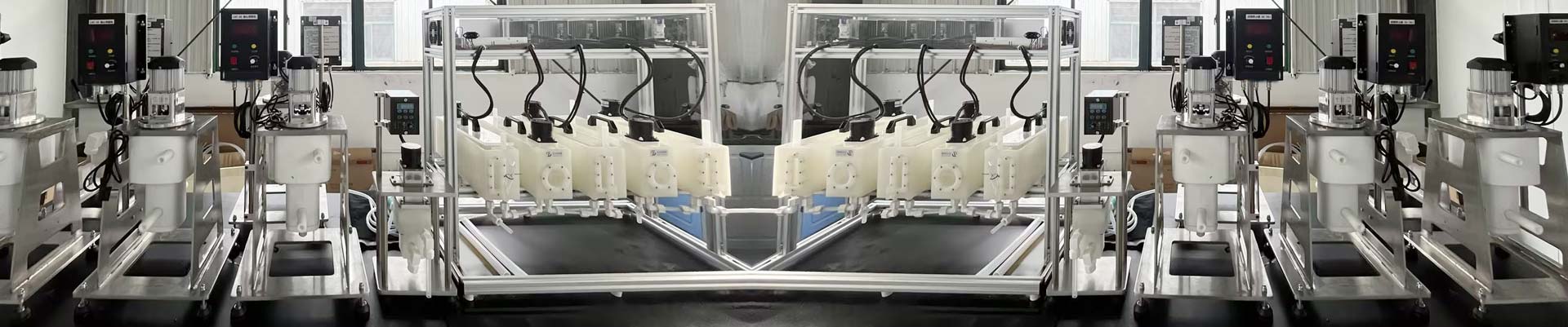
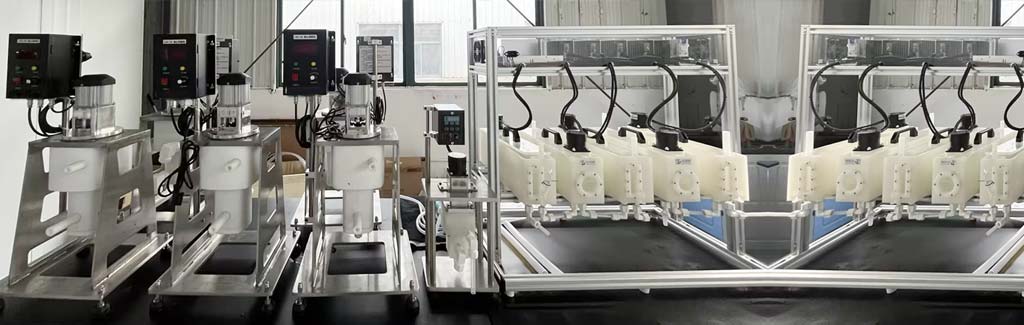
With the rapid development of the global new energy industry, lithium, as the core raw material for power batteries and energy storage equipment, has witnessed a continuous surge in market demand. As one of the most important lithium ore resources, the efficiency, purity and cost of the lithium extraction process from spodumene leachate directly determine the economic benefits and industrial competitiveness of lithium resource development. Currently, the lithium extraction industry from spodumene leachate generally faces three major pain points: complex impurities in the leachate (containing various ions such as magnesium, iron and aluminum), low lithium recovery rate, and high energy consumption and unstable operation of traditional equipment. There is an urgent need for an efficient, stable and low-cost separation and purification equipment to solve this dilemma. As a technically mature and highly adaptable liquid-liquid mass transfer equipment, the mixing clarifier has achieved large-scale application in the solvent extraction lithium extraction process of spodumene leachate by virtue of its core advantages of step-by-step contact and gravity separation, effectively solving industry pain points and promoting the upgrading of spodumene lithium extraction process towards greenization and high efficiency. This article will comprehensively analyze its application value and industry adaptability from the working principle of the mixing clarifier, its full-process application in lithium extraction from spodumene leachate, core advantages, industrial practice and technical optimization direction.
The mainstream process of lithium extraction from spodumene is "roasting-leaching-separation and purification-lithium precipitation", among which the separation and purification of leachate is the key link determining the purity and recovery rate of lithium products. After roasting, water leaching or acid leaching of spodumene, the formed leachate has complex components, mainly containing Li⁺, Mg²⁺, Fe³⁺, Al³⁺, Ca²⁺ and other ions. The Li⁺ concentration is usually 1.5-5g/L, and the magnesium-lithium ratio is relatively high, which brings great challenges to the separation and purification of lithium. The specific manifestations of the core pain points faced by the current industry are as follows:
First, the lithium recovery rate is low. Traditional lithium extraction processes (such as evaporation crystallization and simple precipitation) have insufficient enrichment capacity for low-concentration lithium, and the impurity separation is not thorough, resulting in a lithium recovery rate generally lower than 80% and a large waste of lithium resources. Second, the product purity is difficult to meet the standard. The residual impurity ions will affect the quality of terminal products such as lithium carbonate and lithium hydroxide, which cannot meet the requirements of power battery grade products (purity ≥ 99.5%). Third, the equipment energy consumption and operation cost are high. Traditional extraction equipment has high stirring energy consumption, high extractant loss, and is prone to emulsification, blockage and other problems, with high maintenance costs, which restricts large-scale production. Fourth, the environmental protection pressure is prominent. The waste salt and waste liquid generated by some processes are difficult to treat, which does not meet the requirements of industrial green upgrading under the "double carbon" goal.
In response to the above pain points, the industry urgently needs a separation equipment that can adapt to low-concentration, high-impurity spodumene leachate, achieve efficient separation, low energy consumption operation and green environmental protection. With its unique structure and performance, the mixing clarifier has become the preferred equipment for lithium extraction from spodumene leachate.
Also known as extraction tank, the mixing clarifier is a step-by-step contact liquid-liquid mass transfer equipment that relies on gravity to achieve two-phase separation. It is technically mature and widely used in hydrometallurgy, fine chemical industry and other fields. Its structure and working principle are highly suitable for the separation and purification needs of spodumene leachate. The core composition and working logic are as follows:
The mixing clarifier is mainly composed of two parts: a mixing chamber and a clarification chamber, with supporting auxiliary components such as feed inlet, discharge outlet, stirring device and overflow baffle. In industrial applications, a multi-stage series mode is usually adopted, and a washing section, a stripping section and a regeneration section are set at the same time to build a full-process closed-loop separation system. Among them, the mixing chamber is the core area for mass transfer, with an axial-radial stirring paddle combination inside, which can form a three-dimensional cross-flow stirring effect, accurately control the droplet size at 0.1-0.5mm, and greatly improve the mass transfer efficiency. The clarification chamber is an empty chamber with a large volume. The height of the overflow weir is optimized and a coalescing packing layer is added to stabilize the thickness of the emulsion layer at 5-8cm, helping the mixed liquid to stratify quickly and reducing the dosage of demulsifier.
In view of the strong corrosiveness and high impurity characteristics of spodumene leachate, the tank material of industrial-grade mixing clarifier is high-quality PP/PVC plastic or PPH high-performance plastic. Its physical properties are stable, acid and alkali resistant, and it can withstand the corrosive environment of the leachate. The continuous operation life of the equipment exceeds 8000 hours, and the maintenance cost is 60% lower than that of old equipment. At the same time, the plastic material is convenient for modification and welding, and the feed and discharge ports and internal structure can be flexibly adjusted according to the process requirements.
The core of the mixing clarifier's work is "mixing mass transfer - gravity stratification", and the specific process is divided into three steps: First, the spodumene leachate (aqueous phase) and the special extractant (organic phase) enter the mixing chamber through their respective feed inlets, and are fully mixed under the action of the stirring device. With the selective binding capacity of the extractant to lithium ions, the lithium ions are transferred from the aqueous phase to the organic phase, realizing the preliminary separation of lithium and impurity ions. Second, the mixed liquid enters the clarification chamber through the overflow baffle, and realizes natural stratification under the action of gravity by using the density difference between the organic phase and the aqueous phase. The organic phase (loaded with lithium) is in the upper layer, and the aqueous phase (raffinate, containing impurities) is in the lower layer. Third, the stratified organic phase enters the stripping section and is fully contacted with the stripping solution (such as dilute sulfuric acid and hydrochloric acid), so that the lithium ions are eluted from the organic phase into the aqueous phase to form a high-purity lithium solution. The stripped organic phase is returned to the extraction section for recycling after distillation and regeneration, and the raffinate is discharged up to the standard or recycled after neutralization and precipitation treatment.
In the lithium extraction from spodumene leachate, the mixing clarifier needs to connect key processes such as leachate pretreatment, extraction separation, washing and purification, stripping recovery and organic phase regeneration to form a complete separation and purification link. Each link needs to be targeted optimized according to the characteristics of spodumene leachate to ensure the lithium extraction efficiency and product quality. The specific application process is as follows:
The spodumene leachate (especially the acid leachate) contains a large number of suspended impurities and high-valent metal ions. If it directly enters the mixing clarifier, it will cause equipment blockage and emulsification, reducing the extraction efficiency. Therefore, the pretreatment link is the premise to ensure the stable operation of the mixing clarifier. The core task is to remove suspended impurities, adjust the pH value and optimize the feed liquid characteristics.
The specific operations are as follows: First, the leachate is filtered by a plate and frame filter press to remove suspended impurities and precipitates, ensuring that the feed liquid clarity is ≤ 5NTU. Second, according to the characteristics of the extractant, a buffer is added to the filtered leachate to adjust the pH value to the range of 1.5-9.0 (usually adjusted to 2.0-3.0 when processing acid leachate), so that lithium ions exist in a form more easily extracted, and the extraction reaction of impurity ions is inhibited. Finally, a small amount of demulsifier is added to prevent emulsification in the subsequent extraction process and ensure the two-phase separation effect. After pretreatment, the Li⁺ concentration of the leachate is controlled at 2-5g/L, the content of impurity ions is greatly reduced, and it can be directly entered into the mixing clarifier for extraction separation.
The extraction link is the core of the application of the mixing clarifier. The core goal is to realize the efficient separation of lithium ions from impurity ions such as magnesium, iron and aluminum, and improve the enrichment efficiency of lithium. According to the composition characteristics of spodumene leachate, a multi-stage series mixing clarifier (4-8 stages) is usually adopted, combined with a special synergistic extraction system, to optimize the extraction process parameters and ensure the separation effect.
The key points of process optimization are as follows: First, extractant selection. TBP-FeCl₃ synergistic extraction system (adding 5% Cyanex923) or β-diketone and ionic liquid composite extractant is selected, with sulfonated kerosene as the diluent to enhance the selectivity for lithium ions. The Li/Na separation coefficient can exceed 1000, effectively avoiding the interference of impurity ions. Second, feed ratio. The volume ratio of leachate to extractant is controlled at 1:1-1:3 to ensure that lithium ions are fully extracted. Third, stirring and residence time. The stirring speed is controlled at 300-500rpm, and the single-stage residence time is 15-30min, so that the organic phase and aqueous phase are fully contacted to improve the mass transfer efficiency. Fourth, temperature control. The extraction temperature is maintained at 25-35℃ to avoid the decomposition of the extractant caused by high temperature and reduce the extraction effect. Through the above optimization, the single-stage lithium extraction rate of the mixing clarifier can reach more than 90%, and the extraction rate can be increased to more than 97% after multi-stage series connection.
After separation in the extraction section, the organic phase loaded with lithium still contains a small amount of impurity ions (such as Mg²⁺ and Fe³⁺), which need to be removed through the washing link to ensure the purity of the subsequent stripping solution. The stripping link is to elute the lithium ions loaded in the organic phase to realize the recovery of lithium resources. Both links are completed in the mixing clarifier.
Washing link: The organic phase loaded with lithium is sent to the mixing clarifier in the washing section, and deionized water or dilute hydrochloric acid is added as the washing liquid. The volume ratio of washing liquid to organic phase is controlled at 1:2-1:4, and sufficient contact is achieved through stirring to remove the residual impurity ions in the organic phase. The purity of the washed organic phase is greatly improved, and it can enter the stripping section. Stripping link: The washed organic phase is sent to the mixing clarifier in the stripping section, and fully contacted with 0.5-1mol/L dilute sulfuric acid or hydrochloric acid stripping solution. The stirring speed is controlled at 250-400rpm, and the single-stage residence time is 20-30min, so that lithium ions are eluted from the organic phase into the aqueous phase to form a high-purity lithium chloride or lithium sulfate solution (Li⁺ concentration 8-10g/L). The stripped organic phase is returned to the extraction section for recycling after distillation and regeneration, with a recycling rate of 98% and a solvent loss reduced to less than 0.2%, which greatly reduces the operation cost.
The high-purity lithium solution obtained by stripping is concentrated by evaporation, and then saturated sodium carbonate solution is added to react at 70-95℃ to generate battery-grade lithium carbonate (purity ≥ 99.5%). The filtered mother liquor is returned to the pretreatment process for recycling to realize resource closed-loop. The raffinate generated in the extraction process is treated by neutralization and precipitation, so that the COD is reduced to less than 50mg/L, the treatment cost is only 1 yuan/m³, which meets the requirements of the "Lithium Industry Pollutant Discharge Standard" and effectively reduces the environmental protection pressure.
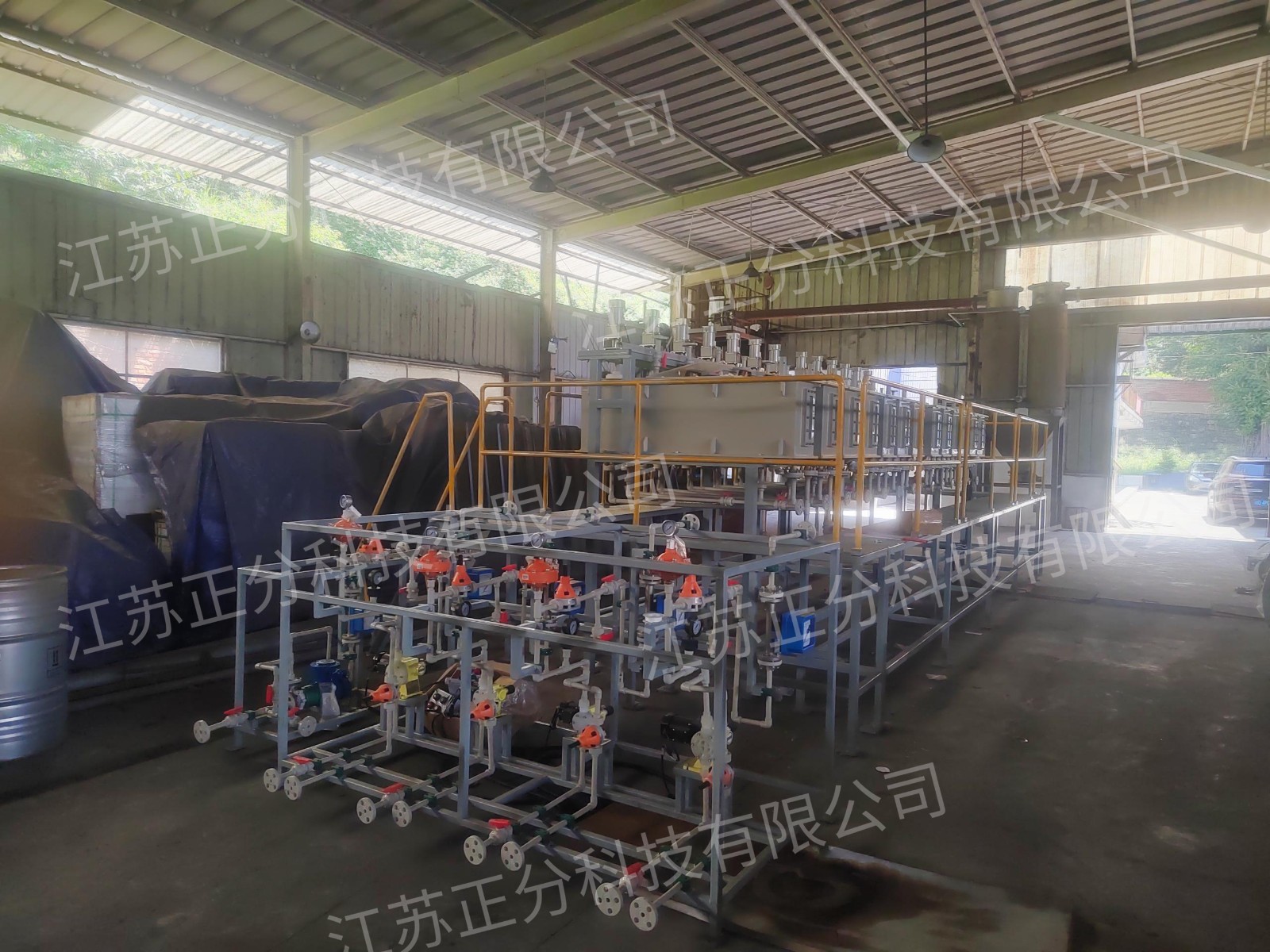
Compared with traditional lithium extraction equipment (such as centrifugal extractor and evaporation crystallization equipment), the mixing clarifier shows significant technical advantages in lithium extraction from spodumene leachate by virtue of its structural design and process adaptability, accurately solving the core pain points of the industry. The details are as follows:
The mixing clarifier adopts a multi-stage series and countercurrent extraction design, which can give full play to the advantage of step-by-step mass transfer. Aiming at the characteristics of low concentration and high impurities of spodumene leachate, it can increase the lithium recovery rate from less than 80% of the traditional process to more than 97%. For example, a spodumene lithium extraction project adopts a 6-stage series mixing clarifier with a treatment scale of 100m³/h. The lithium recovery rate is increased from 75% to 96%, which is equivalent to adding a "hidden lithium mine" for the enterprise and greatly improving the comprehensive utilization efficiency of lithium resources.
Spodumene leachate usually contains 3%-5% suspended solids, with large viscosity fluctuation, which is easy to cause equipment blockage. Through the gravity stratification + adjustable turbine stirring design, the mixing clarifier can adapt to high-impurity and high-viscosity feed liquid, with a continuous operation stability of 99%. At the same time, the tank material is acid and alkali resistant, which can withstand the corrosive environment of the leachate, with low equipment failure rate and long maintenance cycle. Compared with the shortage of second-level separation time of centrifugal extractor, the single-stage residence time of mixing clarifier can reach several minutes, which is more suitable for the slow kinetic complexation reaction between lithium ions and extractant, avoiding the efficiency loss caused by insufficient reaction.
The traditional lithium extraction process (such as evaporation crystallization) has an electric energy consumption of >25kW·h/m³ and an alkali consumption of 1.2t NaOH/t Li₂CO₃, with high operation cost. However, the mixing clarifier relies on gravity stratification without high-speed centrifugation, and the stirring energy consumption is only <15kW·h/m³. Combined with the efficient synergistic extraction system, the alkali consumption can be reduced to 0.7t/t Li₂CO₃, and the environmental treatment cost of raffinate is 98% lower than that of the traditional process. At the same time, the extractant has a high recycling rate and low loss, which further reduces the raw material cost. Data from an industrial project shows that after adopting the mixing clarifier technology, the profit per ton of lithium production is increased by more than 2000 yuan.
The full-process closed-loop separation system constructed by the mixing clarifier can realize the recycling of extractant and leachate mother liquor, reducing the generation of waste liquid and waste salt. The raffinate can be discharged up to the standard after simple treatment without secondary pollution. The tank material is environmentally friendly plastic without heavy metal pollution, which conforms to the green and low-carbon development direction of lithium resource development under the "double carbon" goal, helping enterprises achieve environmental protection compliance and industrial upgrading.
At present, the mixing clarifier has been applied on a large scale in many spodumene lithium extraction projects. Combined with the characteristics of spodumene in different producing areas, the process parameters are optimized, and remarkable economic and environmental benefits have been achieved. The following are two typical industrial cases:
This project adopts an integrated process of "sulfuric acid roasting - water leaching - mixing clarifier extraction - lithium precipitation" to treat spodumene concentrate (Li₂O grade 2.5%). An 8-stage series mixing clarifier is selected, combined with TBP-FeCl₃ synergistic extraction system, to optimize the extraction process parameters and realize efficient separation and purification of lithium. The project operation data shows that the Li⁺ concentration of the lithium leachate is 3.2g/L. After extraction and stripping by the mixing clarifier, the lithium recovery rate reaches 98.2%, the Li⁺ concentration of the stripping solution is 9.5g/L, and the produced battery-grade lithium carbonate has a purity of 99.9%, which fully meets the needs of power battery remanufacturing. The continuous operation stability of the equipment is 99.2%, the stirring energy consumption is 12kW·h/m³, which is 40% lower than that of the traditional process. The annual emission reduction of waste salt is more than 80,000 tons, and the environmental protection treatment cost is reduced by 60%, which greatly improves the economic and environmental benefits of the project.
Aiming at the characteristics of high magnesium-lithium ratio (Mg/Li > 20) and high impurity content of spodumene acid leachate, this project adopts a 6-stage mixing clarifier series system, optimizes the pretreatment process and extractant ratio, and solves the problems of incomplete impurity separation and low lithium recovery rate of the traditional process. Practice shows that after treatment by the mixing clarifier, the lithium recovery rate is increased from 78% to 96.5%, the magnesium-lithium ratio is reduced to less than 5:1, and the residual impurity Fe³⁺ and Al³⁺ are <10ppm. The recycling rate of the extractant is 98.5%, the solvent loss is reduced to less than 0.18%, the production cost per ton of lithium carbonate is reduced by 3500 yuan, and the project investment payback period is shortened by 1.5 years, realizing the efficient and low-cost development of lithium resources.
With the continuous growth of the global new energy industry's demand for lithium resources, the spodumene lithium extraction process is upgrading towards high efficiency, intelligence and greenization. As the core separation equipment, the mixing clarifier needs to be continuously optimized in combination with industry needs to further improve its application value. The future technical optimization direction mainly focuses on three aspects:
First, intelligent regulation and upgrading. Introduce online concentration monitoring and AI parameter optimization system to adjust stirring speed, feed flow, extractant ratio and other parameters in real time, realize precise regulation of process parameters, further improve separation accuracy and efficiency, and reduce manual operation cost. Second, structure and material optimization. Develop new high-efficiency stirring paddles to improve mass transfer efficiency, and develop more corrosion-resistant and longer service life tank materials to adapt to extreme working conditions of high acidity and high impurities, and reduce equipment maintenance cost. Third, process integration upgrading. Deeply integrate the mixing clarifier with membrane separation, adsorption and other technologies to build a full-chain closed-loop system of "roasting-leaching-separation-lithium precipitation", further improve lithium recovery rate, reduce energy consumption and environmental protection pressure, and realize high-value utilization of lithium resources.
Looking forward to the future, under the dual background of lithium resource shortage and industrial green upgrading, the mixing clarifier will play a more important supporting role in the field of lithium extraction from spodumene leachate by virtue of its core advantages of high recovery rate, low energy consumption, strong adaptability and green environmental protection. With the continuous iteration and optimization of technology, the mixing clarifier will further adapt to the characteristics of spodumene in different producing areas, promote the large-scale and standardized development of the spodumene lithium extraction process, and provide a stable lithium resource guarantee for the sustainable development of the new energy industry.
As a technically mature and highly adaptable liquid-liquid mass transfer equipment, the mixing clarifier accurately solves the industry pain points of "low recovery rate, insufficient purity, high energy consumption and high environmental protection pressure" in lithium extraction from spodumene leachate. Through scientific application in the whole process of pretreatment, extraction, washing, stripping and other links, it realizes efficient separation and purification of lithium resources, taking into account both economic and environmental benefits. Industrial practice shows that the mixing clarifier can adapt to the complex working conditions of spodumene leachate, with stable operation and controllable cost, and is the core equipment for large-scale application of the spodumene lithium extraction process. In the future, with the integration of intelligent and integrated technologies, the mixing clarifier will continue to iterate and upgrade, further promoting the development of the spodumene lithium extraction industry towards greenization, high efficiency and high value, and injecting new momentum into the sustainable development of the global new energy industry.
Focus on being Continuous chemical equipment
provider.
If you want to learn more about our centrifugal extractor, mixer settler, Contact us Now