
Continuous chemical equipment
provider
provider
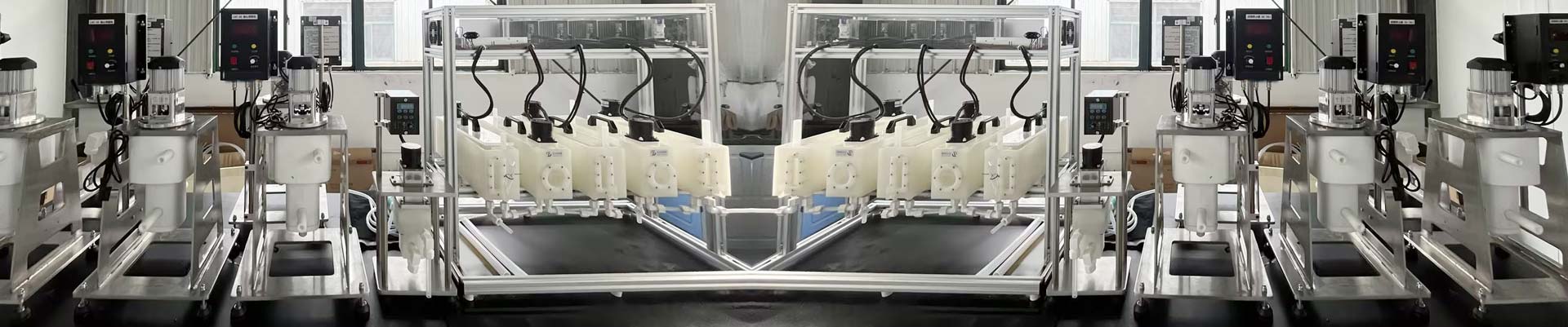
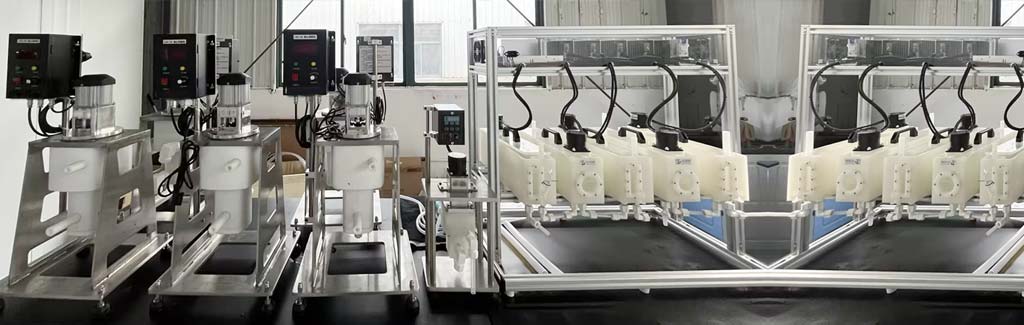
With the explosive growth of the new energy industry, the purity requirements for battery-grade nickel sulfate and cobalt sulfate have continued to tighten. Leading enterprises have set internal control standards that limit cobalt impurities to less than 1mg/L. As "chemical twins," nickel and cobalt have similar ionic radii and chemical behaviors, making traditional separation processes prone to long workflows, high metal loss, and heavy environmental pressure. Extraction tanks (also known as mixer-settlers), as core separation equipment in nickel-cobalt hydrometallurgy, leverage the advantages of stable structure, strong adaptability, and low maintenance costs. Through structural optimization, process regulation, and extraction system adaptation, they achieve precise separation and efficient recovery of nickel and cobalt, becoming a key technical path to solve industry pain points and meet the demand for battery-grade raw materials. This article comprehensively explains the core logic and practical solutions for extraction tanks to achieve efficient nickel-cobalt separation from the perspectives of working principles, core technologies, practical points, industry cases, and development trends.
I. Core Premise: Understanding the Underlying Logic of Nickel-Cobalt Separation by Extraction Tanks
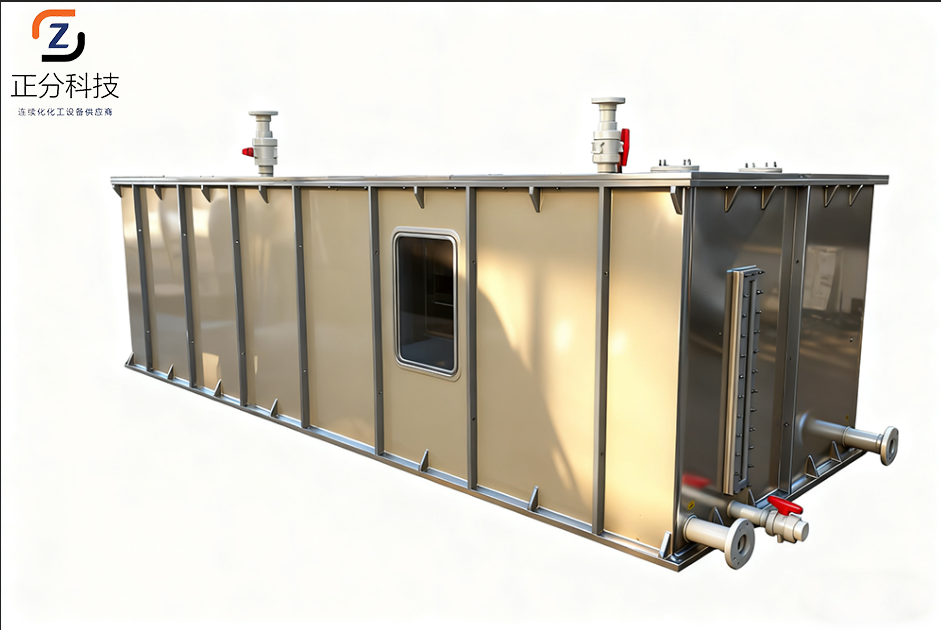
The core of efficient nickel-cobalt separation by extraction tanks relies on the interphase mass transfer principle of liquid-liquid extraction. Essentially, it utilizes the difference in solubility of nickel and cobalt ions in the aqueous phase (ore pulp leachate or waste battery recycling solution) and the organic phase (extractant). Through a three-step cycle of "mixing-mass transfer-phase separation," it completes the selective migration and separation of target ions. Unlike the high-speed rotational separation of centrifugal extractors, extraction tanks rely on gravity for phase separation, making them more suitable for large-scale industrial production, especially for processing high-viscosity nickel-cobalt solutions containing trace solid particles.
Specifically, after the nickel-cobalt mixed solution enters the extraction tank, the aqueous and organic phases are first fully dispersed by the stirring system in the mixing chamber. The organic phase is distributed uniformly in the aqueous phase as tiny droplets to maximize the contact interface and improve mass transfer efficiency. In the interphase mass transfer stage, extractant molecules undergo coordination reactions with nickel and cobalt ions to form stable complexes. Using the difference in their complex stability constants, cobalt ions are preferentially transferred to the organic phase, while nickel ions remain in the aqueous phase (or vice versa). Finally, the mixed solution enters the settling chamber through an overflow baffle and naturally stratifies under gravity based on the density difference between the two phases. The organic phase (loaded with target ions) floats upward, and the aqueous phase (containing impurities or another target ion) sinks downward, which are discharged separately through outlets at different heights to complete a single extraction operation. In actual production, deep separation and refining of nickel and cobalt can be achieved through multi-stage series design to meet the purity requirements of battery-grade products.
II. Key Breakthroughs: 3 Core Technologies for Efficient Nickel-Cobalt Separation by Extraction Tanks
(1) Extraction System Adaptation: "Molecular Recognition" Technology for Precise Nickel-Cobalt Separation
The selection and proportioning of extractants are crucial to determining nickel-cobalt separation efficiency. They need to be tailored to the composition of the solution (nickel-cobalt concentration ratio, impurity content) to avoid "indiscriminate" metal loss. Currently, industrial extractants for nickel-cobalt separation are mainly divided into three categories, which are combined with different systems to achieve precise separation:
1. Acidic Phosphorus Extractants: Represented by P507 and P204, they are the most widely used systems in nickel-cobalt separation. P507 has significantly higher selectivity for cobalt ions than nickel ions in the pH range of 3.0-5.0. Through saponification treatment (saponification degree maintained at 40%~60%), preferential extraction of cobalt can be achieved. High-purity cobalt sulfate is obtained after stripping, and the remaining aqueous phase is further processed to obtain nickel sulfate. P204 is more suitable for the preliminary separation of nickel, cobalt from iron, manganese and other impurities in low-grade solutions, laying the foundation for subsequent deep separation.
2. Chelating Extractants: Represented by iminodiacetic acid (IDA)-type resins, they are like "molecular locks" tailored for cobalt ions. In a strong acid environment with pH 1.5-2.0, they can form stable chelate structures with cobalt ions. Even when the nickel-cobalt ratio in the solution is as high as 10000:1, they can accurately capture cobalt ions, achieving a "one-in-ten-thousand" separation effect. They are suitable for deep purification of high nickel-cobalt ratio solutions and can control the cobalt content in the effluent to below 0.1mg/L.
3. Composite Extraction Systems: For solutions with complex compositions (such as waste battery leachate containing nickel, cobalt, manganese, lithium and other ions), a composite system of P507 and C272 can be used to achieve step-by-step separation of nickel and cobalt. First, P204 is used to extract and separate manganese ions, then P507 is used to extract cobalt ions, and finally the composite system is used to separate nickel ions. This ensures that the purity of each product meets the standard, while increasing the recycling rate of the extractant to more than 95%.
(2) Structural Design Optimization: Enhancing Mass Transfer Efficiency and Reducing Metal Loss
The structural design of the extraction tank directly affects mass transfer efficiency and phase separation effect. It is optimized around the three core goals of "enhancing mass transfer, stabilizing phase separation, and avoiding emulsification," with key improvements in the following three parts:
1. Optimization of Mixing Chamber and Settling Chamber: A dual-chamber structure of "mixing chamber + settling chamber" is adopted, with the settling chamber accounting for 60%~80% of the total tank volume. Guide baffles are added to avoid the impact of turbulence in the mixing zone on phase separation. Some high-efficiency extraction tanks optimize the flow path of the mixed solution, allowing the solution to cross the bottom of the settling tank before overflow separation, improving the uniformity of phase separation and reducing nickel-cobalt loss caused by phase entrainment.
2. Adaptation of Stirring System: According to the characteristics of nickel-cobalt solutions, turbine or paddle-type stirring impellers are selected, paired with variable-speed motors. The stirring intensity is adjusted according to the solution viscosity (power density controlled at 0.8~1.5kW/m³) to avoid insufficient mass transfer due to insufficient stirring or emulsification caused by excessive stirring. Emulsification will make it impossible to effectively separate the organic and aqueous phases, greatly reducing separation efficiency and increasing extractant consumption.
3. Material and Interface Control: For strong corrosion conditions (such as acid-containing leachate), steel-based spray molding, PTFE lining or titanium alloy materials are used, with a continuous service life of more than 8000 hours. For weak corrosion solutions, 304, 316L stainless steel or FRP materials are selected to balance service life and investment cost. At the same time, adjustable interface adjustment pipes and overflow weirs are set to accurately control the position of the two-phase interface, prevent phase entrainment, and further reduce metal loss.
(3) Process Parameter Regulation: Dynamic Adaptation to Maximize Separation Efficiency
Reasonable regulation of process parameters is the key to the extraction tank exerting its optimal performance. It needs to be dynamically adjusted according to the solution composition and separation goals, with core control of the following four parameters:
1. Two-Phase Flow Ratio: The flow ratio of the organic phase to the aqueous phase directly affects mixing uniformity and mass transfer efficiency. It is usually controlled in the range of 1:1~5:1 according to the nickel-cobalt concentration in the solution to ensure full contact between the extractant and target ions, while avoiding waste of the organic phase.
2. Extraction Temperature and pH Value: The temperature is controlled at 25-35℃. Excessively high temperature will cause volatilization of the extractant, increasing VOC emissions and costs; excessively low temperature will reduce the mass transfer rate. The pH value is a key control point for nickel-cobalt separation. When extracting cobalt, the pH is controlled at 3.0-5.0; when extracting nickel, the pH is controlled at 5.0-7.0. By accurately regulating the pH value, the selectivity of the extractant for target ions can be significantly improved.
3. Residence Time: The residence time of the solution in the extraction tank needs to meet the mass transfer equilibrium requirements. In design, it is taken as 3 times the theoretical equilibrium time to ensure sufficient migration of nickel and cobalt ions, avoiding incomplete separation due to insufficient residence time or increased energy consumption and production costs due to excessively long residence time.
4. Number of Multi-Stage Series: According to the separation accuracy requirements, a 3~12-stage countercurrent series design is adopted, divided into extraction section, washing section and stripping section, to improve separation accuracy through reverse feeding. For example, low-grade solutions require 8-12 stages of series connection, which can increase the nickel-cobalt recovery rate to more than 95%; high-grade solutions can meet the battery-grade standard with 3-5 stages of series connection.
III. Industry Cases: Practical Application Effects of Nickel-Cobalt Separation by Extraction Tanks
Case 1: Red Clay Nickel Ore Processing Project of Jinchuan Nickel-Cobalt Concentrator
Aiming at the pain points of high viscosity, small density difference between two phases and low cobalt recovery rate of red clay ore leachate, the project introduced extraction tanks, adjusted the stirring power density to 0.8~1.5kW/m³, extended the residence time of the settling chamber, adopted the P507 extraction system, and achieved efficient nickel-cobalt separation through 8-stage countercurrent series design. After application, the cobalt recovery rate increased from 78% to more than 92%, the cobalt content in wastewater decreased from 0.15g/L to 0.008g/L, the extractant dosage decreased by 40%, saving more than 5 million yuan annually in environmental governance and consumable costs, and the final product purity met the battery-grade standard.
Case 2: 30,000 Tons/Year Processing Project of a Waste Battery Recycling Enterprise in Guangdong
The enterprise introduced multi-stage countercurrent extraction tanks and built an integrated process of "crushing and sorting-acid leaching-extraction-stripping." Aiming at the complex composition of waste ternary battery leachate, it adopted the P204-P507 composite extraction system and 12-stage countercurrent series to achieve step-by-step separation of nickel, cobalt, manganese and lithium. After application, the recovery rates of nickel and cobalt both exceeded 95%, the recycling rate of the extractant reached 98%, saving more than 6 million yuan annually in P507 procurement costs, and the wastewater reuse rate reached 95%, achieving a win-win situation of resource recycling and environmental compliance.
Conclusion
The efficient separation of nickel and cobalt by extraction tanks is mainly achieved through the three-dimensional coordination of "extraction system adaptation + structural optimization + process regulation," which solves the industry pain point of difficult nickel-cobalt separation and balances separation efficiency, product purity and environmental requirements. As core equipment in nickel-cobalt hydrometallurgy, extraction tanks have been widely used in scenarios such as primary ore processing and waste battery recycling, relying on the advantages of simple structure, stable operation and strong adaptability, becoming a key technology supporting the resource cycle of the new energy industry chain. In the future, with the continuous iteration and upgrading of technology, extraction tanks will play a more important role in the field of nickel-cobalt separation, helping the industry achieve the goal of "efficient recovery and green development."
Focus on being Continuous chemical equipment
provider.
If you want to learn more about our centrifugal extractor, mixer settler, Contact us Now