
Continuous chemical equipment
provider
provider
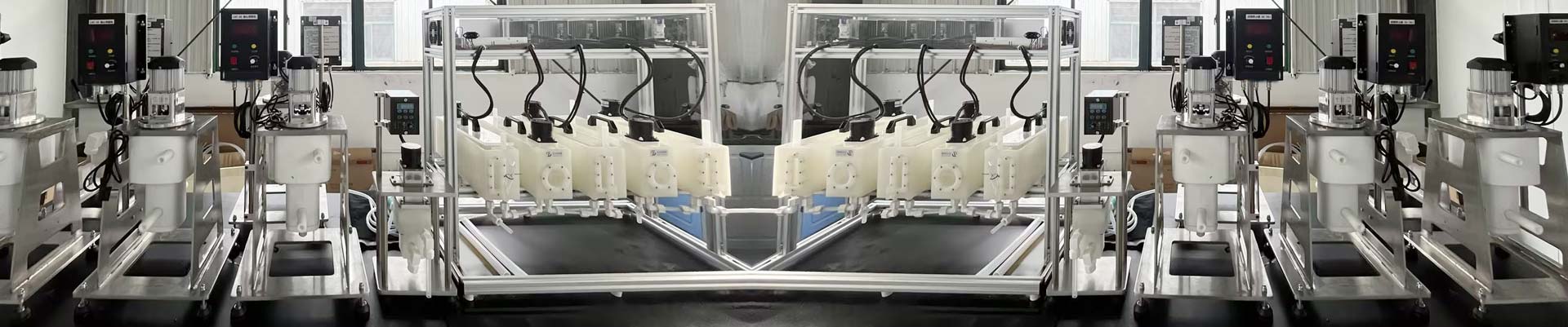
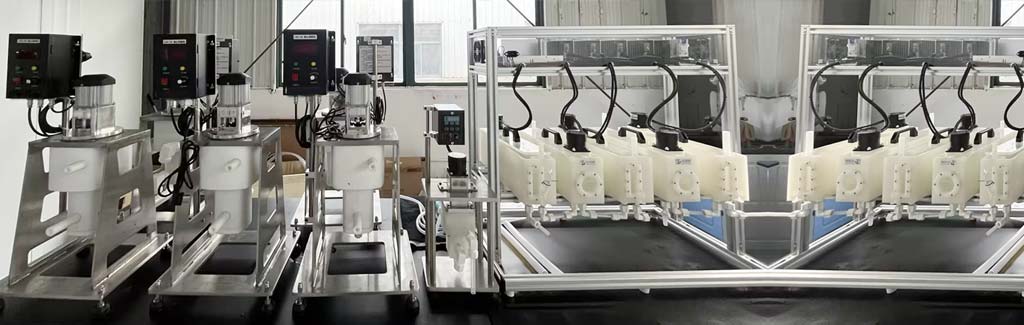
In the hydrometallurgical production system of electrolytic copper, nickel and iron impurities enriched in the electrolyte circulation are the key bottlenecks restricting the quality of cathode copper and affecting electrolytic efficiency. If the impurities are not completely removed, it will not only cause the surface of cathode copper to turn black and inclusions to exceed the standard, making it unable to meet the requirements of high-end copper production, but also increase the energy consumption of the electrolytic cell and shorten the service life of the equipment. As the core equipment for extraction and purification in hydrometallurgy, the mixer-settler has become the mainstream choice for nickel and iron removal from electrolytic copper solution due to its advantages of simple structure, stable operation and adaptability to large-scale continuous production. However, in actual production, problems such as fluctuations in feed liquid impurities, imbalance of extraction system and improper equipment operation are likely to lead to low extraction rate, slow phase separation, entrainment loss of organic phase and other pain points, making it difficult to achieve the dual goals of efficient nickel and iron removal and efficient copper ion retention. Based on industrial production practice, this article focuses on the whole process of nickel and iron removal from electrolytic copper solution by mixer-settler extraction, disassembles the core technical points to ensure the extraction effect, and provides feasible reference for enterprises to achieve stable production, quality improvement and consumption reduction.
The composition of electrolytic copper solution is complex. In addition to the target copper ions and the nickel and iron ions to be removed, it often contains suspended solid particles, colloidal impurities, excessive free acid and other heavy metal ions. These impurities will directly interfere with the extraction mass transfer process, cause emulsification, difficult phase separation, extractant poisoning and other problems, and greatly reduce the extraction effect. Therefore, refined feed liquid pretreatment is the premise to ensure the subsequent extraction efficiency, and two core links need to be targeted.
On the one hand, strictly control the clarification and impurity removal of the feed liquid to completely remove suspended particles. Adopt the combined process of plate and frame filtration and precision filtration to control the content of solid suspended solids in the feed liquid below 10mg/L, so as to avoid solid particles adsorbing on the interface of the two phases to form a stable emulsification layer, which hinders mass transfer and phase separation; for colloidal impurities, the feed liquid system can be further purified by adding a small amount of flocculant and moderate temperature rise to break the gel, so as to eliminate the interference of colloids on the extraction balance. On the other hand, accurately adjust the acidity and pH value of the feed liquid to adapt to the selectivity requirements of the extractant. The electrolytic copper solution is highly acidic, so it is necessary to adjust the pH value to the optimal range of 2.5-4.5 through neutralization fine-tuning and acid value adjustment. This range can not only ensure the selective extraction capacity of the extractant for nickel and iron ions, but also minimize the co-extraction loss of copper ions, avoiding the decrease of extractant capacity caused by too low pH and the precipitation of metal hydroxides caused by too high pH. At the same time, detect the concentration of nickel and iron ions in the feed liquid, reasonably predict the extraction load, and avoid incomplete extraction caused by overloaded feeding.
The adaptability of the extraction system directly determines the separation effect of the mixer-settler. According to the process characteristics of nickel and iron removal from electrolytic copper solution, it is necessary to finely optimize the extractant selection, phase ratio and diluent matching to build an efficient, stable and highly selective extraction system, so as to achieve efficient nickel and iron removal and efficient copper ion retention.
In terms of extractant selection, priority should be given to extractants with strong pertinence and stable performance. In industrial production, modified oxime-based extractants, phosphate-based extractants (such as P204, P507) and synergistic extraction systems are commonly used. Among them, modified oxime-based extractants have stronger selectivity for nickel and iron ions, higher copper-nickel and copper-iron separation coefficients, and are suitable for deep purification of electrolytic copper solution; phosphate-based extractants have large extraction capacity and easy stripping regeneration, which are suitable for the treatment of feed liquid with high impurity concentration. In actual production, according to the nickel and iron content and copper ion concentration of the feed liquid, a compound scheme of main extractant + synergist can be adopted to improve the extraction selectivity and mass transfer efficiency and inhibit the formation of the third phase.
In terms of phase ratio (organic phase/water phase, O/A) matching, it is necessary to dynamically adjust according to the impurity load of the feed liquid. For conventional nickel and iron removal from electrolytic copper solution, the phase ratio is preferably controlled at 1:2-1:4. This ratio can not only ensure that the organic phase has sufficient extraction capacity to adsorb nickel and iron ions, but also avoid the increase of cost and entrainment loss caused by excessive organic phase; if the nickel and iron content of the feed liquid is high, the proportion of organic phase can be appropriately increased, otherwise, the phase ratio can be reduced, so as to always ensure sufficient contact and balanced mass transfer between the two phases. At the same time, sulfonated kerosene is selected as the diluent to adjust the viscosity of the organic phase to 3-5mPa·s, improve the fluidity of the two phases, and enhance the efficiency of mixed mass transfer and clarification phase separation.
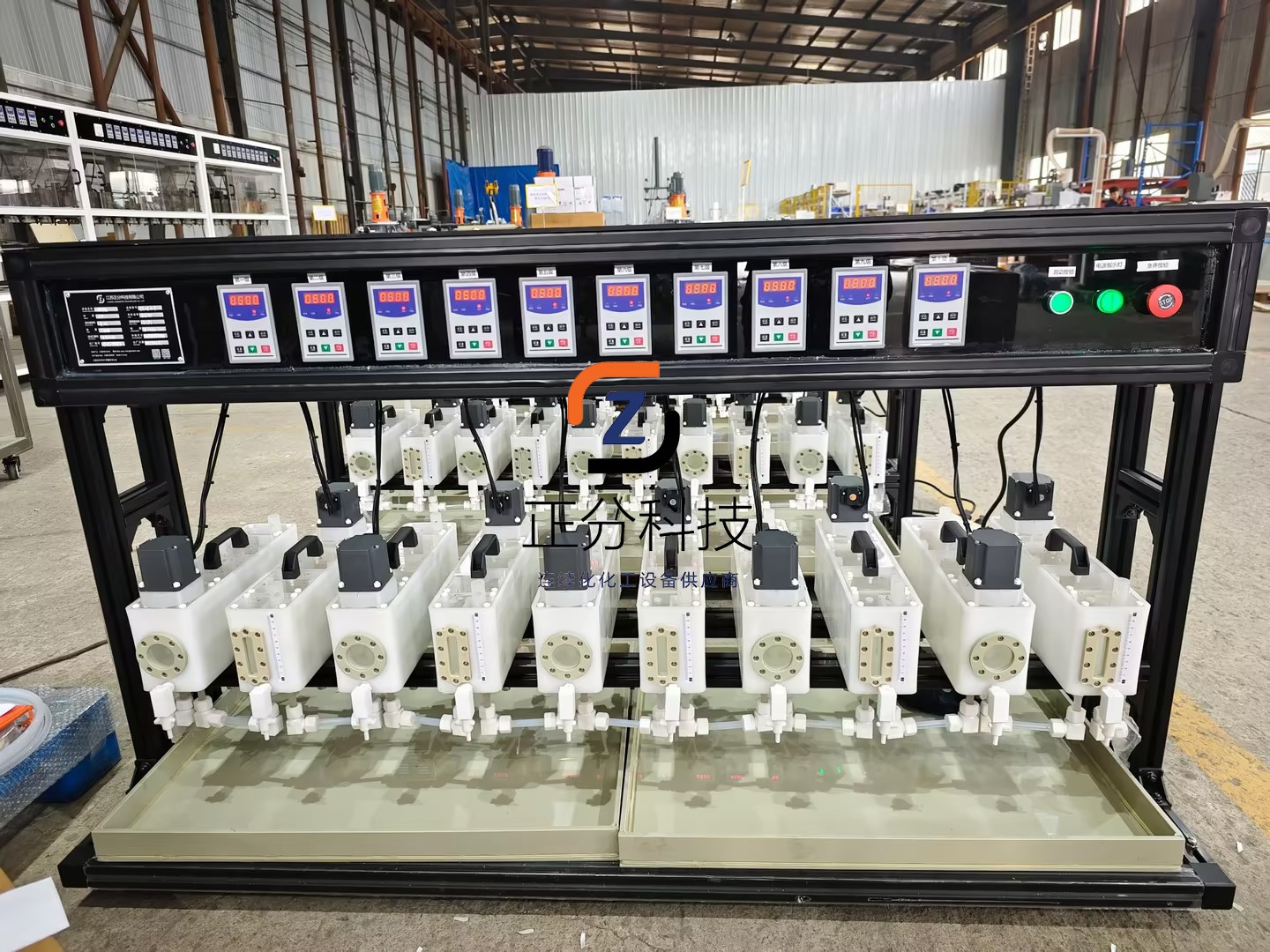
The core operation of the mixer-settler is divided into two stages: mixed mass transfer and clarification phase separation. The precise control of operating parameters is the core to improve the equipment-level efficiency and ensure the extraction effect. It is necessary to focus on optimizing the three key indicators of stirring parameters, residence time and countercurrent stage number, which are in line with the equipment characteristics and process requirements.
Optimize the stirring parameters of the mixing chamber to achieve uniform dispersion of the two phases. Too low stirring speed will lead to insufficient mixing of the two phases, insufficient mass transfer interface and incomplete nickel and iron extraction; too high rotating speed will aggravate droplet breakage, form ultra-fine emulsion, prolong clarification time and increase entrainment loss of organic phase. In industrial practice, the stirring speed is preferably controlled at 300-500rpm, and paddle or turbine stirrers are adopted to ensure that the two phases form a uniform dispersion system in the mixing chamber, which not only strengthens the mass transfer effect, but also avoids excessive emulsification.
Strictly control the residence time of the two phases to ensure complete mass transfer balance and phase separation. Too short residence time in the mixing chamber will result in insufficient transfer of nickel and iron ions to the organic phase and low extraction rate; insufficient residence time in the clarification chamber will lead to incomplete separation of the two phases, entrainment of organic phase in the raffinate and water phase in the loaded organic phase, which not only causes loss of extractant, but also affects subsequent processes. The residence time of a single-stage mixing chamber is recommended to be controlled at 15-30min, and the residence time of the clarification chamber is not less than 30min. It can be flexibly adjusted according to the equipment volume and feed flow rate to ensure that the two phases reach the extraction balance before completing the separation.
Reasonably set the number of countercurrent extraction stages to improve the deep purification effect. A single-stage mixer-settler is difficult to achieve deep nickel and iron removal. In industrial production, 3-5 stages of countercurrent extraction process are mostly adopted. The feed liquid and organic phase flow in the opposite direction, and mass transfer and purification are carried out step by step, which can increase the nickel and iron removal rate to more than 98% and greatly reduce the consumption of organic phase. It is necessary to reasonably adjust the number of stages according to the feed liquid purification requirements, so as to avoid substandard purification caused by insufficient stages and increased energy consumption and equipment investment caused by excessive stages.
The continuous stability of the extraction effect is inseparable from the refined operation and maintenance of the whole process. It is necessary to focus on the three links of organic phase regeneration, equipment inspection and process monitoring, timely troubleshoot hidden dangers, repair imbalances, avoid the attenuation of extraction performance, and ensure the continuous and efficient operation of production.
Do a good job in the regeneration and purification of the organic phase to maintain the extraction capacity. The organic phase loaded with nickel and iron needs to be treated by pickling and stripping regeneration to remove the adsorbed impurity ions and restore the extraction performance; regularly carry out centrifugal purification and static clarification of the circulating organic phase to remove the entrained solid impurities and degradation products, prevent the aging and poisoning of the organic phase, and ensure that the extractant maintains stable extraction efficiency for a long time. At the same time, regularly supplement the lost extractant to maintain the stability of the organic phase composition.
Strengthen the daily inspection of equipment to ensure the equipment operation status. Focus on checking the stirring device of the mixing chamber, the guide plate of the clarification chamber, the overflow port, and the feeding and discharging pipelines, timely clean up the blocked debris and repair equipment leakage to ensure the stable flow field of the mixing chamber and smooth phase separation of the clarification chamber; regularly detect the sealing performance and corrosion resistance of the equipment to avoid the corrosion of the equipment by acidic feed liquid and affect the operation stability.
Improve the real-time process monitoring and dynamically adjust the operating parameters. Build an online monitoring system to real-time monitor the pH value, flow rate, nickel-iron-copper ion concentration, two-phase interface height, stirring speed and other parameters of the feed liquid. Once data abnormalities occur, timely adjust the operation plan to maintain the balance of the extraction system; establish a process account to record the extraction rate, organic phase loss, impurity removal rate and other data, which is convenient for subsequent process optimization and problem tracing.
The extraction of nickel and iron from electrolytic copper solution by mixer-settler is a systematic process. The guarantee of extraction effect does not depend on a single link, but on the joint efforts of feed liquid pretreatment, extraction system optimization, equipment operation control and whole-process operation and maintenance. Only based on industrial production practice, accurately grasp every technical detail, and targetedly solve the pain points such as emulsification, difficult phase separation and low extraction rate, can we achieve efficient and deep removal of nickel and iron, and at the same time maximize the retention of copper ions, improve the quality of cathode copper products, reduce production energy consumption and extractant loss, and help electrolytic copper metallurgical enterprises achieve the production goals of green efficiency, stability and quality improvement.
Focus on being Continuous chemical equipment
provider.
If you want to learn more about our centrifugal extractor, mixer settler, Contact us Now