
Continuous chemical equipment
provider
provider
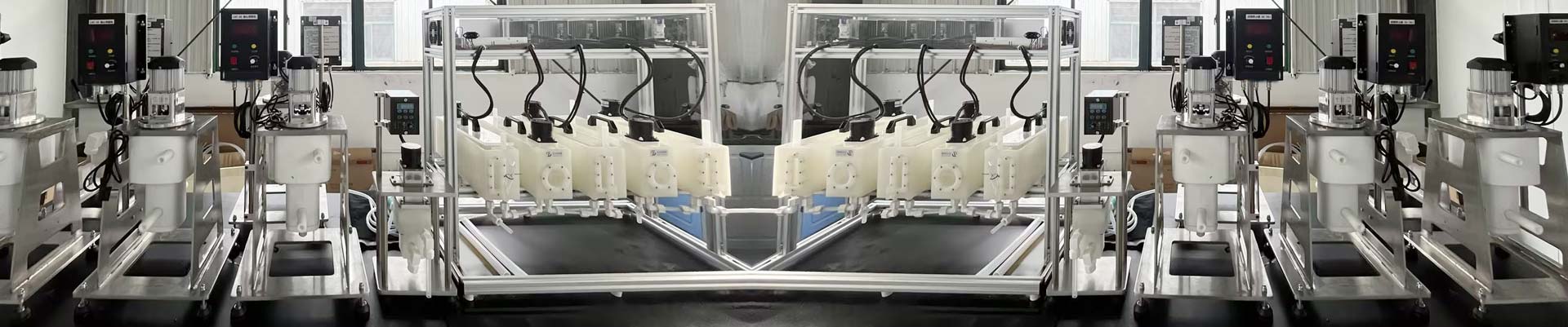
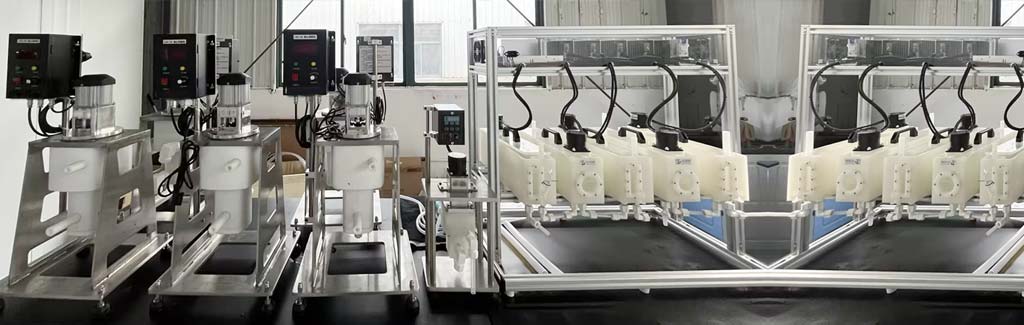
In liquid-liquid separation processes across various industries, reactor stirred tanks have long been the traditional choice—but they come with critical drawbacks that hinder efficiency and scalability. Common pain points include low separation efficiency, high solvent consumption, large footprint, frequent emulsification, and inability to adapt to continuous large-scale production. Specifically, reactor stirred tanks suffer from uneven mass transfer, slow separation speeds, difficult demulsification, significant solvent evaporation loss, bulky size, and lack of continuous operation capability. As industries upgrade, there is an increasing demand for extraction equipment that offers higher precision, energy efficiency, and intelligence. The liquid-liquid centrifugal extractor, a specialized device that achieves efficient liquid-liquid phase separation using a supergravity field, has emerged as a game-changer. With its core advantages of high separation efficiency, strong emulsification resistance, energy saving, and space saving, it has been widely adopted in multiple industrial sectors, driving process upgrades, cost reduction, and green production. This article breaks down its key applications, core advantages, and practical value, providing actionable insights for industry professionals.
The core function of a liquid-liquid centrifugal extractor is to achieve rapid mixing, mass transfer, and efficient phase separation of two immiscible (or slightly miscible) liquids—without adding additional chemical agents or altering the chemical properties of target substances. It is suitable for all scenarios from small-scale laboratory research to large-scale industrial production. Currently, it has been maturely applied in seven major industries, with expanding application scenarios.
The chemical and fine chemical industry has complex extraction requirements, with variable feed compositions and emulsifiable liquids, demanding high equipment adaptability and separation precision. Reactor stirred tanks perform poorly in this sector, with drawbacks such as poor adaptability, easy emulsification, low separation precision, high solvent loss, and inability to operate continuously—failing to meet the strict purity requirements for fine chemical products. Liquid-liquid centrifugal extractors, however, excel in flexibility and adaptability, covering multiple sub-scenarios. In fine chemicals, they are used for purification and separation of pharmaceutical intermediates, dye intermediates, food additives, and fragrances, ensuring stable product purity and reducing impurity content. In organic chemicals, they are applied in the extraction and separation of organic acids, organic bases, aromatic hydrocarbons, and petrochemical product purification—for example, extracting citric acid, acetic acid, and other organic acids, and separating aromatics (such as benzene and toluene) from non-aromatics. This significantly improves production efficiency and reduces solvent loss. Additionally, centrifugal extractors play an efficient role in chemical catalyst extraction and solvent recovery, aligning with the trend of green chemical development and overcoming the shortcomings of reactor stirred tanks.
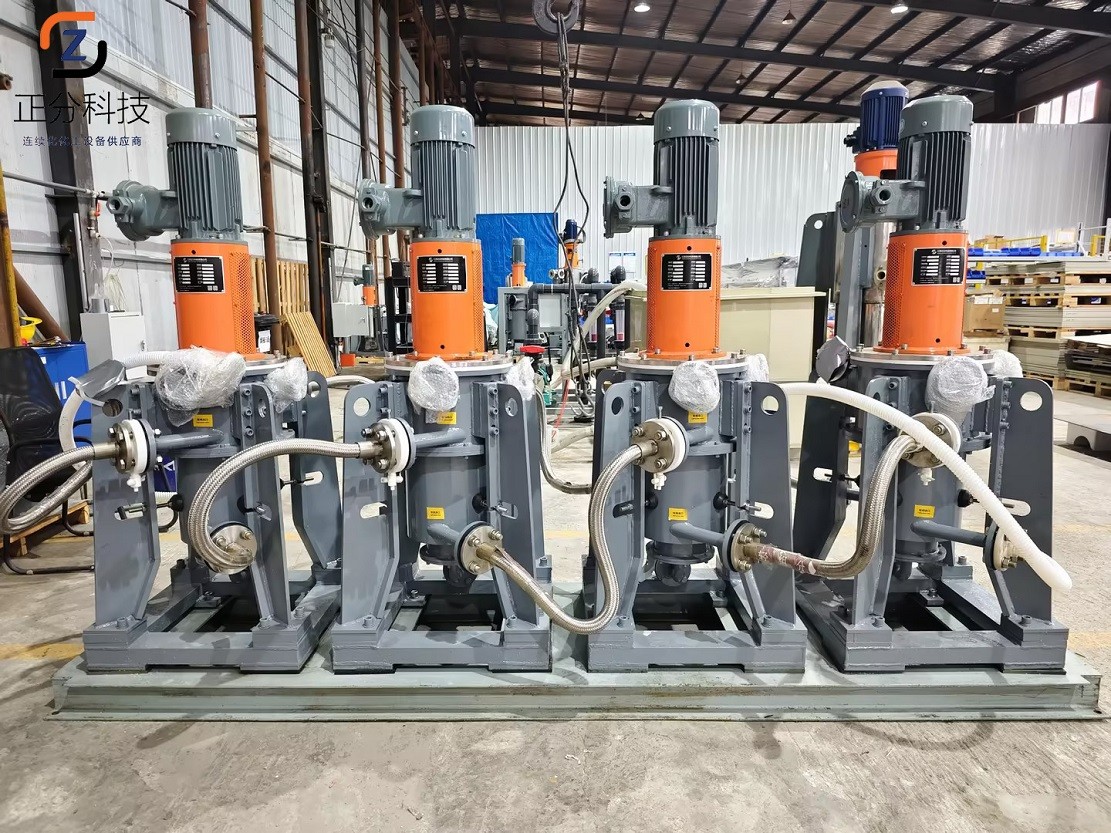
The pharmaceutical industry imposes strict requirements on extraction precision and safety. Reactor stirred tanks have critical flaws in pharmaceutical production: poor airtightness, high risk of secondary contamination, low separation efficiency, insufficient product purity, and failure to meet GMP standards—making them unsuitable for pharmaceutical production needs. Liquid-liquid centrifugal extractors, with their excellent airtightness, no secondary contamination, and high separation efficiency, have become core equipment in pharmaceutical production. In chemical pharmaceuticals, they are used for extraction and purification of pharmaceutical intermediates and refining of bulk drugs (e.g., antibiotics, vitamins), effectively removing impurities, improving product purity, and meeting GMP requirements. In traditional Chinese medicine extraction, they are applied to extract active ingredients from Chinese herbal medicines (e.g., tea polyphenols, caffeine), maximizing the retention of active components while shortening extraction cycles. This solves the problems of low efficiency, high active ingredient loss, and high contamination risk associated with reactor stirred tanks, promoting the modernization of traditional Chinese medicine production.
With tightening environmental policies, there is an urgent need for wastewater treatment and resource recovery across industries. Reactor stirred tanks are inefficient in wastewater treatment, with drawbacks such as low separation efficiency, long treatment cycles, inability to achieve resource recovery, high chemical consumption, and high risk of secondary pollution—failing to meet the dual needs of environmental compliance and resource recycling. Liquid-liquid centrifugal extractors play a key role in treating high-concentration organic wastewater, focusing on the treatment and resource recovery of phenol-containing wastewater, amine-containing wastewater, ester-containing wastewater, and printing and dyeing wastewater. For example, in coal chemical and petrochemical industries, centrifugal extractors extract phenol from wastewater, enabling up-to-standard discharge while recovering valuable resources to create additional economic benefits. In printing and dyeing wastewater treatment, they separate and recover dyes, reducing water pollution and treatment costs. Additionally, they achieve efficient separation in scenarios such as ship sewage treatment, oil-water separation, and groundwater purification, adapting to the diverse needs of the environmental protection industry and making up for the environmental shortcomings of reactor stirred tanks.
The food and fragrance industry requires safe, efficient, and residue-free extraction and separation. Reactor stirred tanks have drawbacks in this field: uneven mixing, low extraction efficiency, easy impurity residue, product contamination from solvent evaporation, and inability to achieve large-scale continuous production—making them unsuitable for safe production in the food and fragrance industry. Liquid-liquid centrifugal extractors perfectly meet these requirements. In the food industry, they are used for edible oil refining, food pigment extraction, and sweetener separation. For example, in the refining of soybean oil and rapeseed oil, they remove impurities and odorous substances through extraction, improving edible oil quality. In the fragrance industry, they extract natural flavors and fragrances from plants, retaining natural aromas while shortening production cycles and improving efficiency—helping enterprises achieve large-scale production and solving the key pain points of reactor stirred tanks.
In pesticide production, reactor stirred tanks used for extraction suffer from severe emulsification, insufficient product purity, high solvent loss, long production cycles, and inability to operate continuously—seriously affecting product quality and production efficiency. Liquid-liquid centrifugal extractors are used for extraction, purification of pesticide intermediates, and refining of pesticide products, effectively solving these drawbacks, improving product quality, and reducing solvent loss. In the bioengineering field, reactor stirred tanks fail to efficiently retain biological activity, have incomplete separation, and pose a high risk of biological product contamination. Liquid-liquid centrifugal extractors achieve efficient extraction and purification of bioactive substances, maximizing the retention of biological activity and promoting the upgrading of the bio-products industry.
In addition to the six core industries mentioned above, liquid-liquid centrifugal extractors are widely used in the cosmetics industry (extracting cosmetic nutrients), oil-water separation (dewatering and desalting of crude oil, heavy oil, diesel, etc.), and laboratory research (small-scale extraction experiments, process optimization). With their flexible adjustability and strong adaptability, they are gradually expanding into more niche fields, becoming a universal equipment in liquid-liquid separation.
Compared to reactor stirred tanks, liquid-liquid centrifugal extractors are based on supergravity technology, effectively addressing the key pain points of reactor stirred tanks—uneven mass transfer, low separation efficiency, easy emulsification, high solvent loss, large footprint, inability to operate continuously, and poor safety. Their advantages are reflected in efficiency, energy saving, adaptability, safety, and other dimensions, perfectly matching the actual needs of industrial production. Details are as follows:
Liquid-liquid centrifugal extractors generate centrifugal force thousands of times greater than gravity through high-speed rotation, replacing the gravity sedimentation + mechanical stirring mode of reactor stirred tanks. A core drawback of reactor stirred tanks is uneven mixing and low mass transfer efficiency, leading to phase separation times of several hours and incomplete separation. In contrast, centrifugal extractors reduce phase separation time to a few seconds to dozens of seconds, increasing separation efficiency by more than 90%. Single-stage extraction efficiency can reach over 85%, and multi-stage series extraction efficiency can exceed 98%, quickly completing mixing, mass transfer, and phase separation, significantly shortening production cycles and increasing enterprise productivity. For example, after a fine chemical enterprise replaced reactor stirred tanks with centrifugal extractors, the single-stage separation time was reduced from 4 hours to 6 minutes, and the annual equipment processing capacity increased by 280% compared to the traditional process—greatly improving production efficiency and solving the problems of uneven mixing and incomplete separation of reactor stirred tanks.
Due to insufficient stirring intensity and uneven mixing, reactor stirred tanks are prone to emulsification, leading to entrainment loss of target products, incomplete separation, increased demulsification costs, material loss, and reduced product purity—one of their core drawbacks. Liquid-liquid centrifugal extractors, with their strong centrifugal force, can effectively break emulsified layers, with an emulsification entrainment rate of less than 0.05%, greatly reducing target product loss and chemical consumption in the demulsification process, thus lowering production costs. They are particularly suitable for separating complex, high-viscosity, and emulsifiable liquids, completely solving the emulsification problem that is difficult to overcome with reactor stirred tanks and improving product recovery rates.
In terms of energy saving, reactor stirred tanks require additional high-power stirring motors and transmission devices, resulting in high energy consumption and low energy utilization. In contrast, liquid-liquid centrifugal extractors are directly driven by motors without redundant transmission components, featuring a compact structure and 40% lower comprehensive energy consumption compared to reactor stirred tanks. In terms of space, reactor stirred tanks are bulky and occupy a large area, while centrifugal extractors only take up 1/3 to 1/5 of the space—effectively saving workshop space, especially suitable for enterprises with limited workshop area. Additionally, reactor stirred tanks have poor airtightness, leading to significant solvent evaporation loss, while the closed design of centrifugal extractors can increase solvent recovery rate to over 90%, further reducing solvent procurement costs and helping enterprises achieve cost reduction and efficiency improvement, making up for the energy and space shortcomings of reactor stirred tanks.
Reactor stirred tanks have extremely poor adaptability: they cannot adjust flow ratio or rotation speed, can only adapt to liquids with a single viscosity and density, and can only achieve small-scale batch production—failing to meet the needs of large-scale continuous industrial production and multi-variety production, which is one of their core drawbacks. Liquid-liquid centrifugal extractors have strong adaptability: they can meet the separation needs of liquids with different densities and viscosities by replacing weir plates and adjusting frequency, with a wide flow ratio adjustment range. They are suitable for both small-scale, multi-variety laboratory research and large-scale continuous industrial production. At the same time, they can flexibly construct single-stage or multi-stage series countercurrent and cross-flow extraction systems to achieve in-depth separation and purification of target substances, adapting to the personalized needs of different industries and processes with strong versatility—perfectly solving the poor adaptability of reactor stirred tanks.
Most reactor stirred tanks are open or semi-open, with poor airtightness, which can easily cause leakage of toxic, harmful, and volatile media, posing safety hazards. They also require manual operation to control stirring, separation, and other links, resulting in cumbersome operation, high labor costs, high failure rates, difficult maintenance, and inability to operate continuously—affecting production continuity. Liquid-liquid centrifugal extractors adopt a fully automatic closed-loop operation design, requiring no manual intervention, with easy operation and continuous uninterrupted operation, reducing labor costs and avoiding production risks caused by human error. Their excellent airtightness meets the application environment of explosion-proof, toxic, harmful, and volatile media, complying with GMP standards—preventing solvent evaporation from polluting the environment and ensuring the personal safety of operators. In addition, the equipment has a stable structure, low failure rate, and easy maintenance, enabling long-term stable operation, reducing equipment maintenance costs, and ensuring production continuity—completely solving the shortcomings of reactor stirred tanks such as poor safety, cumbersome operation, and unstable operation.
Reactor stirred tanks require a large amount of chemical demulsifiers during extraction, which easily generate additional pollutants. Their poor airtightness leads to severe solvent evaporation, polluting the environment and failing to meet green production requirements—an important drawback. Liquid-liquid centrifugal extractors do not require additional chemical demulsifiers, only needing extractants suitable for the process, without altering the chemical properties of target substances or generating additional pollutants. Their closed design reduces solvent evaporation, minimizing environmental pollution. At the same time, they achieve resource recovery through efficient separation (e.g., useful substances in wastewater, solvent recovery), aligning with the trends of green chemical industry and circular economy. They help enterprises achieve environmental compliance and sustainable development, meeting the environmental needs of current industrial upgrading and making up for the environmental shortcomings of reactor stirred tanks.
As an efficient equipment that solves the core drawbacks of reactor stirred tanks (uneven mass transfer, low separation efficiency, easy emulsification, high solvent loss, large footprint, poor safety, and non-environmental friendliness), liquid-liquid centrifugal extractors have been deeply integrated into seven core industries—chemical, pharmaceutical, environmental protection, food, pesticide, bioengineering, and other specialized fields—relying on their core advantages of high separation efficiency, strong emulsification resistance, energy saving, space saving, and wide adaptability. They have become a key support for industrial process upgrading, cost reduction, efficiency improvement, and green production. With the continuous upgrading of industries and tightening of environmental requirements, the application scenarios of liquid-liquid centrifugal extractors will continue to expand, and their technical advantages will become more prominent, providing more efficient, environmentally friendly, and reliable liquid-liquid separation solutions for the high-quality development of various industries. For enterprises with liquid-liquid separation needs, choosing a liquid-liquid centrifugal extractor suitable for their own processes to replace traditional reactor stirred tanks can effectively break production bottlenecks and enhance core competitiveness.
Focus on being Continuous chemical equipment
provider.
If you want to learn more about our centrifugal extractor, mixer settler, Contact us Now