
Continuous chemical equipment
provider
provider
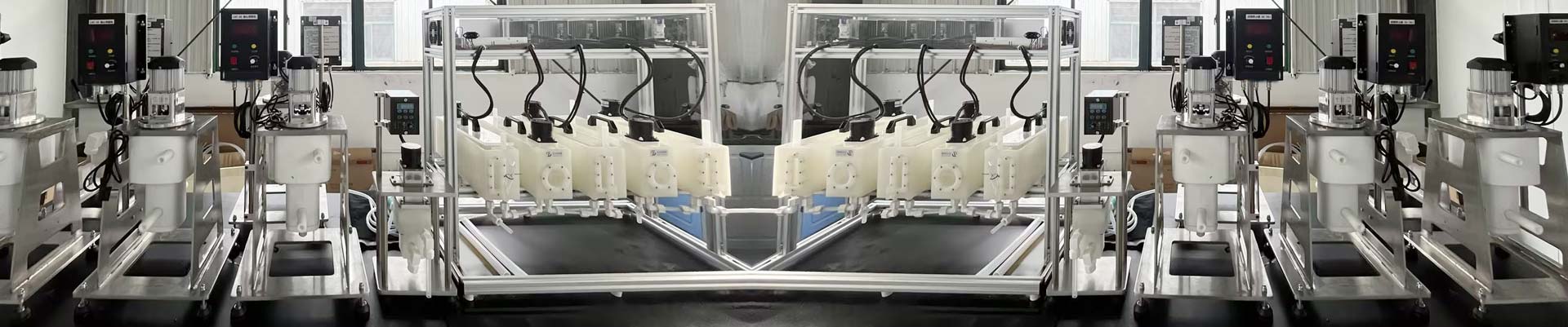
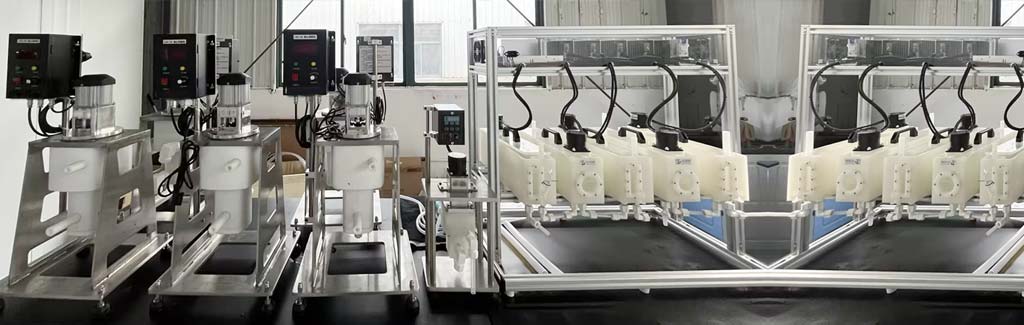
Mixer Settler--Enhancing Nickel-Cobalt Extraction Efficiency
(I) Structural Design Optimisation: Adapting to Nickel-Cobalt Extraction Process Requirements
The structural design of extraction tanks directly determines nickel-cobalt extraction efficiency, centred on
‘enhancing mass transfer and stabilising phase separation’. The fundamental approach involves partitioning
the mixing chamber from the clarification chamber. Typically, the clarification chamber occupies 60% to 80%
of the total tank volume. Guiding baffles are incorporated to prevent turbulence in the mixing zone from
disrupting phase separation. Some high-efficiency extraction tanks further enhance phase separation uniformity
by optimising the flow path of the mixed solution. This involves allowing the solution to traverse the bottom of
the clarification chamber before overflowing for separation. Adaptive agitator design proves particularly critical.
For nickel-cobalt solutions, turbine or paddle-type agitators are selected. Variable-speed motors adjust agitation
intensity according to solution viscosity, preventing insufficient mixing that compromises mass transfer or excessive
agitation that induces emulsification.
Material selection must balance corrosion resistance and cost-effectiveness: for highly corrosive conditions (e.g., acidic
leachate), steel substrates with plastic coating, PTFE lining, or titanium alloy materials are employed, enabling
continuous operation exceeding 8,000 hours. For weakly corrosive solutions, 304 or 316L stainless steel or fibreglass
-reinforced plastic (FRP) are selected to balance service life and investment costs. Furthermore, adjustable interface
control tubes and overflow weir heights enable precise positioning of the two-phase interface, preventing nickel
and cobalt losses due to phase entrainment.
(2) Process Parameter Control: Achieving Precise Optimisation of Nickel-Cobalt Extraction
Rational control of process parameters is central to maximising extraction tank performance, requiring dynamic
adjustment based on nickel-cobalt feed composition and separation objectives. The two-phase flow ratio (organic
phase to aqueous phase) directly impacts mixing uniformity and mass transfer efficiency, typically maintained
within 1:1 to 5:1 based on nickel-cobalt concentration in the feed. Residence time must satisfy mass transfer
equilibrium requirements, typically designed at 1.2 to 2 times the theoretical equilibrium time to ensure complete
migration of nickel and cobalt ions. Equally critical are extractant formulation and saponification degree control:
the volume fraction of organic acid extractants should be maintained between 5% and 30%, while saponification
degree is maintained between 40% and 60%, significantly enhancing selective extraction rates for nickel and cobalt.
The integration of intelligent control technology further enhances the operational stability of the extraction tank.
By incorporating automatic pH and flow monitoring systems, the extractant ratio and agitation intensity are
optimised in real time, effectively preventing emulsification. This reduces operator requirements by 70% while
ensuring consistent compliance with nickel and cobalt recovery rates and product purity standards.
Focus on being Continuous chemical equipment
provider.
If you want to learn more about our centrifugal extractor, mixer settler, Contact us Now